


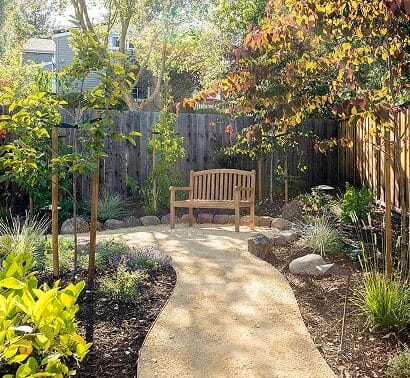

The most important thing you can do for your garden this fall might have less to do with how it looks—and more to do with how you use it.
Summer asks a lot of our gardens.
Months of sunshine, flowering, fruiting, and growth take their toll on the soil. As we move into fall, it’s time to think about replenishing what the growing season has used up, preparing for the winter rains, and setting the stage for a healthy spring.
In the Bay Area, fall is a wonderful time to refresh your soil with compost, replenish mulch, and provide appropriate organic nutrients where needed. The key is understanding what your plants need, rather than applying fertilizer indiscriminately. Thoughtful soil care now can help support a healthier, more resilient garden in the seasons ahead.
But there’s something else I want you to consider this fall.
What if your garden wasn’t just something beautiful to look at, but something you actively experienced every day?
A Garden Should Give Something Back
One of my favorite things about landscape design is the opportunity to create spaces that engage all our senses. A garden can be beautiful, of course, but it can also nourish us, connect us to our families and traditions, and bring small moments of joy into an otherwise busy day.

Think about the plants you could incorporate into your landscape:
Oregano and thyme. These perennial culinary herbs can double as aromatic groundcovers in suitable sunny, well-drained locations. Brush past them and release their fragrance. Harvest a handful for dinner. Watch them return season after season.
Roses for cutting. Imagine stepping outside on a Saturday morning to gather flowers for your kitchen table or to bring to someone you love. Your garden becomes a source of beauty that extends into your home and your relationships.
Mexican marigold (Tagetes lucida). Also known as Mexican tarragon, this aromatic plant has cultural and traditional uses in parts of Mexico. Tagetes lucida- traditionally used during Dia de los Muertos or All Souls Day on alters as meaningful offerings help honor ancestors and loved ones who have passed for our ancestors and those who have passed. It can also be used medicinally for limpia, simple energetic ways to cleanse before enter into your home or a new situation. At the least it has an aromatic scent that is deer tolerant, pest resistant, and exposes a sweat, uplifting scent as you brush by it on your way to work or home.

When we incorporate culinary herbs, medicinal and aromatic plants, cut flowers, and other sensory elements, we create natural invitations to step outside, touch, smell, harvest, observe, and participate.
The garden becomes part of our lives, rather than another thing on our property to maintain.
You Don’t Have Time to Garden? Start With 20 Minutes.
I know how easy it is to let the weeks slip by.
Work, family, errands, responsibilities. Even when we have a beautiful outdoor space, we can find ourselves spending most of our time looking at it through a window — or rushing past it on the way to something else.
But here’s a reason to reconsider that habit.
A 2019 study published in Frontiers in Psychology followed 36 urban adults over eight weeks. Researchers found that spending time in an outdoor setting that offered a sense of connection with nature was associated with reductions in physiological stress markers. The greatest efficiency in reducing cortisol, a stress hormone, occurred during nature experiences lasting approximately 20–30 minutes.
The researchers specifically asked participants to avoid distractions such as phones, social media, and reading during their nature breaks.
You don’t necessarily need to drive to a trail, plan a weekend getaway, or carve out an entire afternoon.
You can start right outside your back door.
Put your phone away for 20 minutes. Smell the roses. Harvest some herbs. Pull a few weeds. Sit beneath a tree and notice the light moving through its branches.
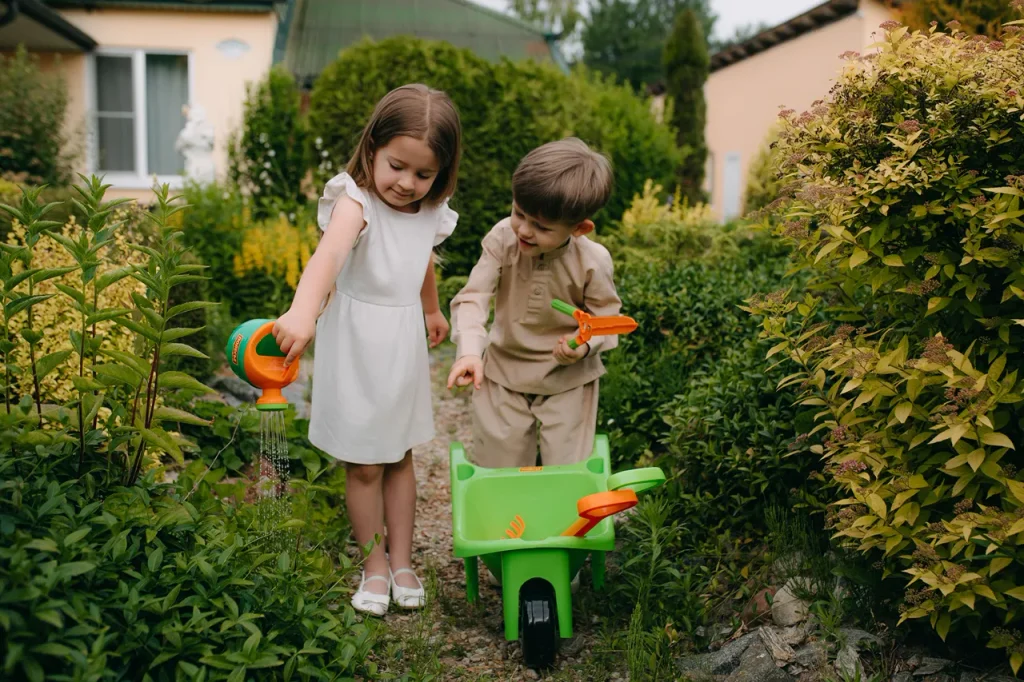
And here’s an idea: try spending one hour a week in the garden with your family. Make it a shared ritual, not a chore. Plant something, gather flowers, tend a raised bed, or simply enjoy being outside together.
Gardening in community is one of my favorite things. Everyone can participate at their own pace, the work becomes a shared effort, and there’s something deeply satisfying about seeing the results of what you’ve created together.
It is a way to connect without buying anything, planning an elaborate outing, or staring at another screen.

Before the Winter Rains, Make Time for Your Garden
Over the next month, I encourage you to set aside a couple of afternoons to reconnect with your outdoor space.
Pull out your gardening gloves—or use your bare hands. Refresh your soil. Tend to the plants that need attention. Notice what is thriving and what could use a little care before winter arrives.
And if you’ve invested in a beautifully designed landscape, let yourself experience the full value of that investment.
Don’t just admire it from the kitchen window.
Walk through it. Smell it. Touch it. Harvest from it. Invite friends over. Let your children explore it. Take your morning coffee outside. Give yourself permission to linger.
Because the real value of a garden isn’t simply what it looks like on the day it’s completed.
At Art Garden Design, we believe landscapes should be living works of art—spaces that connect us to our homes, our communities, and the natural world around us.
This fall, give your garden a little nourishment. But give yourself some, too.Step outside. Take a breath. And let nature meet you where you are. Want to hear more about designing and building HERITAGE LANDSCAPES w/ ART GARDEN DESIGN
Click here for our story in Marin Magazine
With gratitude,
Alana Corpuz
CEO of ART GARDEN DESIGN